
教員ブログProfessor's blog
Esaki ta mi Korsow! (This is my Curaçao): Language, Culture, and Student Life
Kinsella Valies
Have you ever imagined studying on a small tropical island where people use several languages every day? Curaçao is my home country, a vibrant island in the Caribbean, and it offers a unique perspective on how language, culture, and education can come together in one place. By exploring life on Curaçao, students in Japan can gain a broader understanding of the world and their place within it.
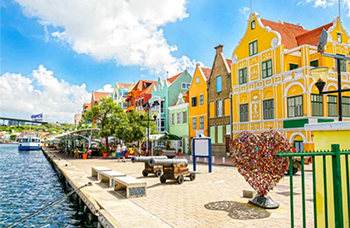
Curaçao is a small island of about 444 square kilometers, yet it belongs to a vast and diverse region. The Caribbean is made up of more than 7,000 islands, each with its own history, culture, and identity. This often surprises students who may think of the Caribbean as a single country. In reality, it is a multilingual and multicultural region shaped by centuries of migration, trade, and colonization. Curaçao itself is located in the southern Caribbean and is known for its capital city, Willemstad, where brightly colored buildings, a World Heritage Site, reflect both European and Caribbean influences.
The island’s climate is tropical, but it is also relatively dry compared to other Caribbean locations. Warm temperatures remain consistent throughout the year, and cooling trade winds provide comfort even during hotter periods. Rainfall is limited, and much of the island’s water supply comes from desalination. This combination of sun, wind, and sea creates an environment that supports both daily life and tourism, while also shaping the rhythm of student life and outdoor activities.
Curaçao’s history is complex and deeply connected to global movements. The island was first recorded by Europeans in 1499 and later came under Spanish control before being taken by the Dutch in 1634. It became an important center in the transatlantic slave trade, and the effects of this period are still visible in the island’s cultural and social structure. One important historical event was the slave revolt led by Tula in 1795, which remains a powerful symbol of resistance and identity. In 2010, Curaçao became a constituent country within the Kingdom of the Netherlands, reflecting its ongoing political and cultural connections to Europe.
Food in Curaçao also tells a story of cultural exchange. Traditional dishes combine African, Caribbean, and European influences. For example, meals often include fresh fish served with funchi, a cornmeal-based dish that has its roots in the food traditions of enslaved Africans. Other local flavors include rich stews and tropical fruits such as mango and tamarind, which are widely available. These foods are not only part of daily life but also represent the island’s history and identity.
University life in Curaçao is both demanding and rewarding. Students typically attend classes five days a week, with schedules that can extend from early morning into the evening. Many students balance their studies with part-time work, which requires strong time management and perseverance. Some students describe their daily life as busy, stressful, and hard but rewarding, reflecting the challenges they face as well as the satisfaction they gain from their efforts. Even so, students enjoy small class sizes, close relationships with teachers, and valuable opportunities for internships and exchange programs abroad. These experiences help them develop both academic knowledge and practical skills for the future.
One of the most distinctive features of Curaçao is its multilingual environment. It is common for people to speak four languages: English, Dutch, Spanish, and Papiamentu. Papiamentu is a Creole language and the national language of Curaçao. It combines influences from Spanish, Portuguese, Dutch, African languages, and Arawak, an indigenous language. In everyday conversation, you might hear simple expressions such as “Kon ta bai?” meaning “How are you?,” “Danki” meaning “Thank you,” and “Dushi” meaning “Sweat heart or delicious.” Learning even a few words can help you connect with people and experience the culture more deeply, showing how language functions as a bridge between individuals and communities.
For students in Japan, learning about Curaçao offers more than just knowledge about a distant place. It provides insight into how language learning can open doors to new cultures and perspectives. Understanding a multilingual society can also inspire students to develop their own language skills and consider opportunities abroad. In a globalized world, the ability to communicate across cultures is increasingly valuable.
In conclusion, Curaçao demonstrates how a small island can have a rich and meaningful impact on those who study it. Its combination of history, culture, language, and education offers important lessons for students everywhere. By engaging with places like Curaçao, students can deepen their curiosity, expand their worldview, and take meaningful steps toward becoming global citizens.
Danki—thank you for reading.